For tens of thousands of years, travel itself has been evolving. Just like that, aviation trends have been shifting every year to address travelers' demands. The demands can be for affordability, sustainability, convenience, or unique experiences.
While aviation trends don't just spring up overnight, it is a studied response of the aviation sector. These are a mix of traffic data, airline capacity metrics, financial performances, fleet orders, and regulatory or environmental factors. Organizations like IATA, ICAO, and consulting firms analyze these numbers annually and decide on which trends they should opt for.
In this blog, you will find detailed information on the rising aviation trends of 2026 and how it affects you as a frequent flyer or traveler. Read along.
Modernization, the Dier Need
One of the most important aviation trends of 2026. This will replace older, less efficient planes with new-generation aircraft. The introduction of newer models with advanced technology has proven to improve the overall passenger experience, making travel smoother and more convenient.
The aircraft used before 2025 have started to take their last breaths. Aircraft, including Boeing 747-400 (Jumbo Jet), Airbus A340, McDonnell Douglas MD-80/90, and older Boeing 767s and 777-200s, have retired due to inefficiency. The reasons are high fuel consumption, expensive maintenance, stricter environmental regulations, and old cabins.
Advancements that will take place in 2026
To tackle the inefficiency problem, the modernization trend is demanding aircraft with low-carbon production, quieter cabins, better air quality, and modern amenities. The aircraft should also be economically efficient for airlines that meet the global standards. Major airlines like Emirates, Lufthansa, Singapore Airlines, and IndiGo have invested billions in new aircraft, and Boeing and Airbus manufacturers have adapted innovations, offering models that meet efficiency and sustainability targets.
Sustainability & Green Flying
A single aircraft like the Boeing 777 or Airbus A350 emits around 200-300 tons of CO2 if it takes a round trip. Now, just imagine globally when 38-40 million flights take off to serve the needs of the travelers, how much would it affect the environment? The answer is approximately 800-900 tons of CO2 annually. Now, over the years, the aviation industry itself has released several billion tons of greenhouse gases, marking this trend, Sustainability as a critical one for 2026.
A few more reasons for this trend to rise are eco-conscious travelers, ICAO and IATA regulatory rules, and economic risk due to penalties if sustainable standards are not met. Many passengers are choosing airlines with visible sustainable commitments, while governments are demanding a solution for environmental problems.
Sustainability Initiatives for 2026 and Beyond
Now there are a few initiatives that have been in use before this year, while some are being strategically planned, that will help tackle this global problem. The SAF, sustainable aviation fuel use, will be scaling in 2026, reducing emissions by up to 80% compared to conventional jet fuel. The new aircraft technology and modernization with Boeing 777X, Airbus A350, and A321XLR are now designed for low fuel consumption, reducing the output emission of pollutants. Not just that, the research into electric and hydrogen-powered aircraft is still a mainstream project that everyone is waiting for, which will serve short-haul routes.
The biggest initiative taken in association with the sustainability trend is the ICAO’s Strategic Plan 2026-2050. This will create a roadmap for safe, secure, and environmentally sustainable aviation. The target set by ICAO is net-zero emissions.
Airport Technology & Passenger Experience
Global passenger traffic has reached its peak, prompting people to demand faster check-in and boarding procedures, just as we expect from our banking services. Now everyone wants speed, convenience, and personalization. Post-pandemic, health and hygiene concerns have accelerated, and not just that, airlines are finding it costly to manage millions of passengers daily.
Imagine that in 2015, 3.8 billion people traveled, and in 2024, around 9.5 million travelers had packed their bags and gone places. Now, this increased number means what? More passengers mean higher demand at airports, more baggage, longer queues, and operational pressure. This directly affects the check-in time and numerous other factors.
Technological Advances in Airport
To serve millions of passengers, airports are now equipped with biometrics and digital identity technology. These technological advances offer passengers facial recognition and fingerprint scanning at check-in, security, and boarding. Directly cutting waiting time and reducing paperwork. One great example of such an advanced airport is the Orlando International Airport (MCO). MCO uses full biometric boarding for international departures.
Newer technologies like AI have also been integrated into security and operations. Now, AI systems detect risk faster than manual checks, predict analytics optimize passenger flow, and reduce congestion. In 2026, the baggage tracking system will also be updated. Smart baggage tracking using RFID tags and mobile apps is a new thing for passengers to track their bags in real time, reducing lost luggage problems. Other advancements related to this trend include contactless and self-service check-in and boarding, touchless kiosks, and mobile boarding passes, all speeding up the process; personalized passenger experience through AI-powered app suggestions for itinerary planning, dining, shopping, and lounge options.
Route Expansion & Regional Growth
The new era of travelers is emerging; they do not need luxurious breaks or extended stays, but an experiential, value-driven vacation that is relaxing and immersive. Not just that, smaller cities will be seeing a rise in travelers, as mega hubs are not the main catch, demanding direct long-haul flights. While this is a public demand, tourism boards and the government are tying up and pushing airlines to reconnect regions with low economy. These emerging demands and a shift in travelers' mindset have made this aviation trend a defining one in 2026.
Initiatives Taken By Airlines
To capture this rising demand, airlines are improving their aircraft efficiency. Airlines are planning to use A321LXR and Boeing 787 for direct transatlantic flights from smaller US and European cities. Airports in secondary cities like Austin and Nairobi are being upgraded to handle international traffic, and we can see this with Lufthansa and KLM adding direct flights to Europe, bypassing traditional hubs like Dallas and Houston. Airlines have also expanded codesharing and joint ventures to connect passengers seamlessly across small regions. For example, Delta Airlines and LATAM Alliance have together expanded connectivity between U.S. cities and South America, excluding traditional hubs.
The new AI drive has also integrated with this aviation trend. Now, AI will be used for route planning, helping airlines identify profitable new markets faster, and with that, governments are taking initiatives, offering subsidies and infrastructure investments to encourage airlines to serve underserved regions.
Industry Economics and Risks
A structural aviation trend to rise in 2026 and beyond. Airlines, while they make record profits of approximately 41 billion, the margins remain very low, making this sector one of the lowest-margin industries. Airlines also face high costs, geopolitical risks, and sustainability pressures, forcing the use of AI, SAF, alliances, and cost-transformation strategies.
How these Trends will Affect Travelers
As these new aviation trends reshape the aviation industry, they will impact travelers worldwide. Convenience, expanded route options, and smoother flight journeys on long-haul routes are some changes travelers will experience. There are numerous other factors that will affect travelers in 2026 and beyond, some of which are given below.
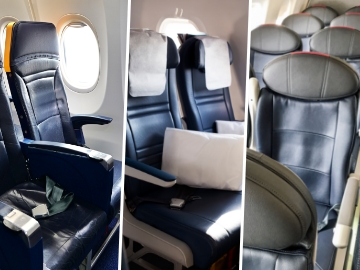
- Passengers will now find quieter cabins with better air quality and more comfortable seating.
- There will be fewer layovers due to the use of narrow-body aircraft such as the A321LXR. Direct flights on long-range routes will be more convenient.
- Ticket pricing may go low if operational costs are lower.
- Passengers, before booking a ticket, will get info on carbon footprints, and the use of SAF fuel will increase to reduce the guilt of eco-conscious travelers. Fares may go up due to high-cost investments.
- Now, checking in, baggage tracking, and payments will be smoother, faster, and more convenient. There will be shorter queues and touchless kiosks to improve hygiene and speed.
- Travelers from smaller cities, or those looking for a vacation in less crowded spots known for offering an experiential and value-driven break, will have more flight options. The need to connect with mega-hubs will decline, and access to new destinations such as Asia, Africa, and Latin America will be provided.
- Flying can be more expensive and unpredictable, but efficiency gains may stabilize the high ticket costs.
Explore Related Stories